
AI Consulting
Clarify which business problem deserves attention when the opportunity is still uncertain. Explore AI Consulting →
Nazam LLC helps define, prototype, build, and test AI-assisted applications and internal tools. We start with the user and the job, then decide what the first usable version must prove.
A dedicated product can make sense when several workflows need one interface, users need roles or permissions, data must stay searchable, systems need to work together, or customers need their own experience. Dashboards and reporting may also justify one place to work when existing software cannot reasonably support the job. A simpler AI Automation workflow may be enough when current tools already fit.
Clarify which business problem deserves attention when the opportunity is still uncertain. Explore AI Consulting →
Connect existing tools and decisions when a bounded workflow can solve the problem without a new product.
Design a dedicated interface, internal tool, or customer experience when people need to use and manage a persistent system.
Who uses the product? What are they trying to accomplish today? What data, decisions, and approvals are involved? What error would matter? These answers determine whether ordinary software, AI assistance, or a controlled agent belongs in the design.
Learn who experiences the problem, how often it occurs, what they use now, and which assumption is riskiest. A conversation, workflow sketch, small prototype, or limited pilot can reveal whether custom software adds value before a larger build.
Choose one primary user, one important job, essential data and integrations, required approval points, and the smallest usable workflow. Put useful but nonessential features into a later decision, informed by actual use.
The boundary depends on the users and risk of the project. A working demo is not automatically ready for customers, and a small first release still needs controls appropriate to its use.
Tests an interface, workflow, AI behavior, or technical assumption. It may be disposable and is not necessarily ready for live operations.
A deliberately limited, usable first version that delivers core value to real users and creates a way to learn from their experience.
Requires reliability, permissions, security decisions, monitoring, error handling, support, and maintenance suited to its audience and consequences.
A product may need a user interface, business rules, persistent data, authentication and roles, integrations, an AI layer, approvals, and monitoring. We choose the smallest architecture that supports the actual workflow and its expected use, rather than adding technology for its own sake.
Classification, extraction, summarization, search, recommendations, drafting, and conversation can help with uncertain information. Predictable calculations, permissions, and state changes belong in explicit software rules. Multi-step AI actions need bounded tools and review.
Role-based access, confirmation before important actions, an audit trail, escalation, fallbacks, and stop conditions make behavior reviewable. AI output is treated as uncertain; a person can approve, correct, or reject consequential actions.
Internal tools and customer products often need to connect with a CRM, email, ecommerce platform, forms, spreadsheets, databases, reporting tools, or other APIs. We identify who owns each system, what data is needed, what happens when a connection fails, and which actions require approval.
User and workflow
Version-one scope
Test assumptions
Interface and systems
Normal and failure paths
Handoff and learning
Testing should cover the ordinary workflow, missing data, permissions, responsive interfaces, integration failures, and recovery. AI features also need examples of expected and ambiguous input, unsupported requests, wrong classifications, missing context, repeat actions, and escalation when the system is unsure.
Agree on representative cases and acceptance criteria, compare model output with human judgment, and test the actions surrounding it. A model can still make mistakes after a successful demo.
Review usage, errors, feedback, model behavior, and changing integrations. Fixes, new features, monitoring, and support should be explicitly scoped rather than assumed to be included forever.
Imagine a service company with leads in forms, inboxes, a CRM, and spreadsheets. A small automation might connect those systems. If the team also needs one dashboard, user roles, searchable history, manual approval, analytics, and several related workflows, a dedicated internal application may be easier to use and govern. We would test that need before defining version one; this example reports no client outcome.
Depending on scope, product work may include discovery, feature priorities, interface design, architecture, a prototype, application development, integrations, AI components, testing, release support, documentation, or post-release recommendations. These are possibilities, not a universal package.
The project agreement should define deliverables, source-code access, licenses, third-party services, credentials, hosting responsibilities, data ownership, intellectual-property terms, and maintenance. Specific terms are agreed for each engagement.
Use existing software or one small automation when either solves the problem. If the workflow keeps changing, the main user is unclear, the idea is untested, or the expected value does not justify a build, improve the process, test the idea, or pause. Sometimes our recommendation is to build no product yet.
Possible projects include internal operational tools, AI-assisted business applications, customer portals, workflow dashboards, document and data tools, ecommerce or marketplace interfaces, and controlled AI-agent interfaces. The fit and delivery scope are assessed case by case.
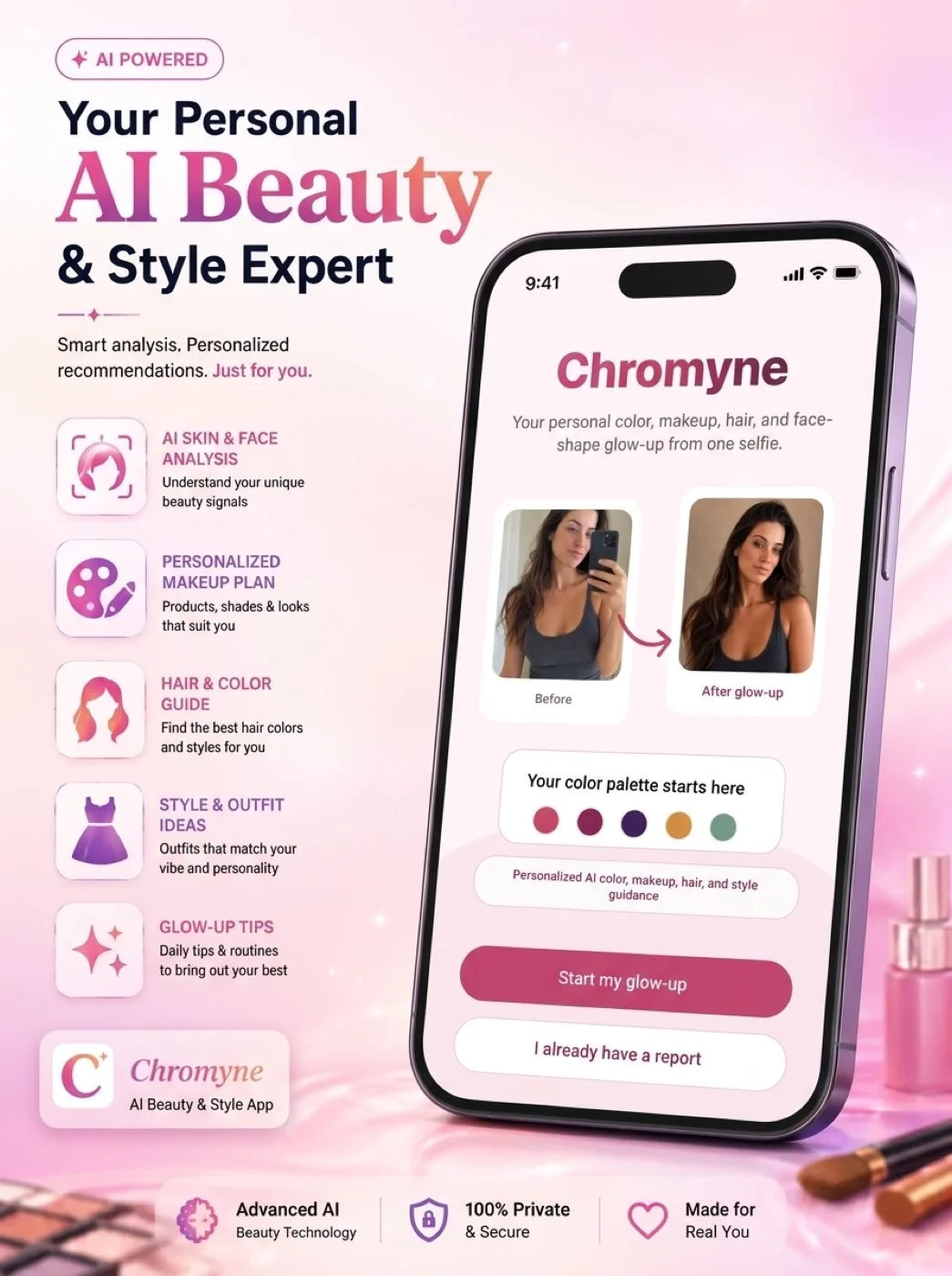
Explore the visible product interface and AI beauty-analysis concept. Its availability is not presented as evidence of adoption or performance.
View product →Owned pilot exampleExplore the salon-facing workflow and AI style-preview interface. Pilot status and commercial details should be confirmed before broader proof claims.
View workflow →It is the work of defining, designing, building, testing, and supporting software where AI helps perform a specific job. The product still needs usable workflows, reliable data, controls, and an owner.
A known workflow may be handled by existing tools and automation. An application makes more sense when several workflows need one interface, roles, searchable history, reporting, or a customer-facing experience. If the user or value is still unclear, we may recommend validating the need before building either.
Use a prototype to test an uncertain idea or behavior. Build a limited usable MVP when the core job is clear enough to test with real users. Production requirements depend on the risk and audience.
No. Rules or a bounded AI feature may be enough. An agent is considered only when multi-step decisions add value and its tools, permissions, and review can be controlled.
We assess the relevant integrations, data access, permissions, and failure behavior during scoping. The feasible approach depends on those systems and the approved scope.
Source-code access, intellectual property, hosting, licenses, handoff, and ongoing support are defined in the project agreement. Launch may be followed by a separately scoped period of evaluation, fixes, or improvement.
Bring the idea, the rough workflow, or the product that needs a clearer next version.
Start a product enquiry ↗Nazam LLC serves businesses in Quincy and Greater Boston, Massachusetts. We work remotely and arrange on-site consultations at client locations when useful for the project. See local services and how consultations work →